“1 25000” Explained: UX, GIS, Compliance, and Manufacturing Implications
GPT_Global - 2026-11-02 10:34:18.0 18
In multilingual UX design, how should “1 250.00” be displayed alongside its equivalent in Arabic numerals (١ ٢٥٠٫٠٠)?
For remittance businesses serving diverse global customers, multilingual UX design isn’t optional—it’s essential for trust and compliance. When displaying monetary values like “1 250.00”, localisation goes beyond translation: it requires correct numeral systems, spacing, and decimal separators aligned with regional conventions. In Arabic-speaking markets, numerals must use Eastern Arabic digits (٠١٢٣٤٥٦٧٨٩), not Western ones. So “1 250.00” becomes “١ ٢٥٠٫٠٠”—note the thin space as thousand separator and the Arabic decimal point (٫), not a dot. Displaying both formats side-by-side (e.g., “1 250.00 / ١ ٢٥٠٫٠٠”) reinforces clarity, reduces cognitive load, and prevents costly misinterpretation during cross-border transfers. Consistent numeral rendering also signals cultural respect—critical in high-stakes financial interactions. Failing to localise numbers can erode credibility, increase support queries, or trigger regulatory scrutiny in markets like Saudi Arabia or Egypt, where Central Bank guidelines mandate native-language financial presentation. Automated localisation tools with ICU-compatible number formatting ensure accuracy at scale. Ultimately, precise multilingual number display strengthens conversion, lowers abandonment, and positions your remittance service as inclusive, reliable, and locally attuned—key differentiators in a competitive fintech landscape.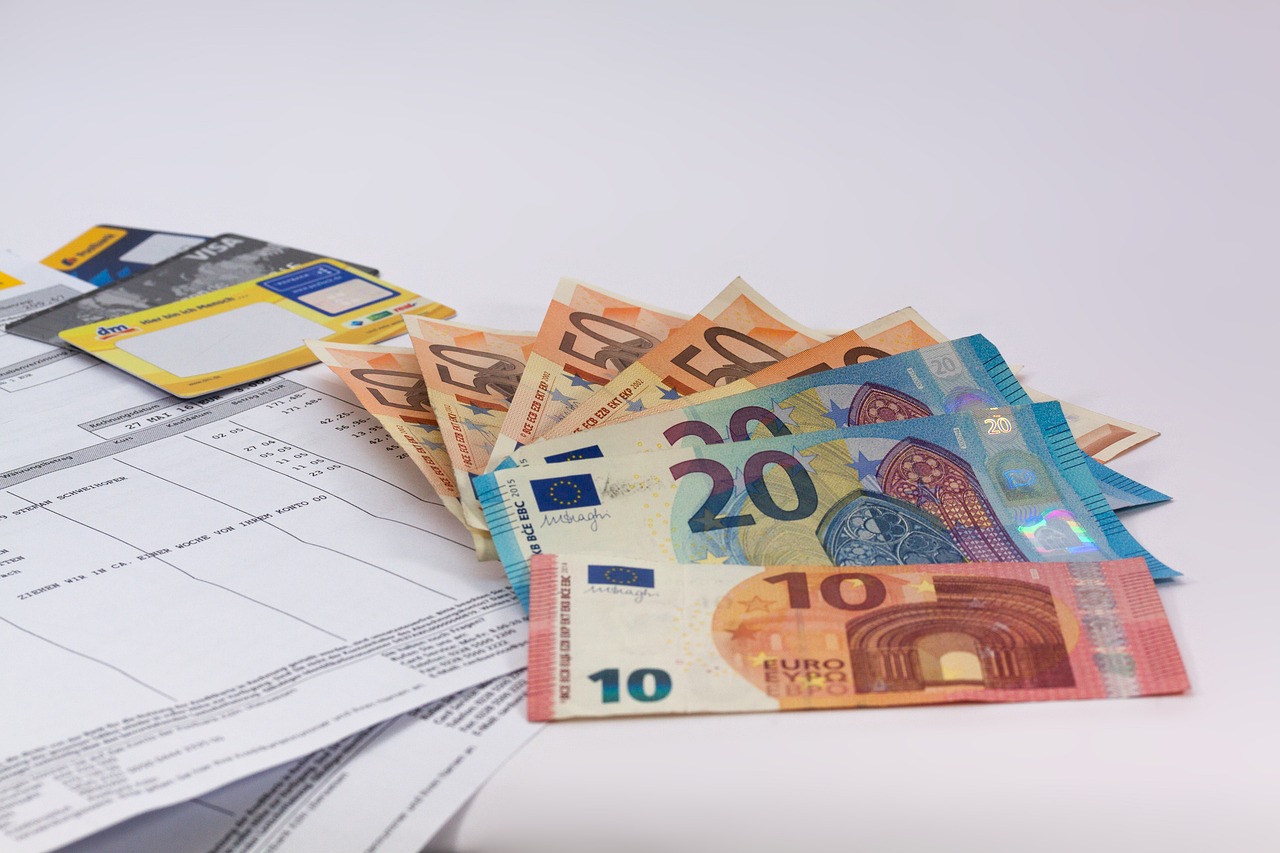
Could “1 250.00” represent a coordinate pair (e.g., x=1, y=250.00) in GIS metadata—and what projection assumptions would apply?
When processing international remittances, accurate geospatial data—like coordinates in GIS metadata—can enhance fraud detection, compliance mapping, and recipient location verification. While “1 250.00” *could* be misread as a coordinate pair (x=1, y=250.00), this format violates standard GIS conventions: coordinates require explicit delimiters (e.g., comma or space with context) and realistic bounds. For instance, latitude must fall between −90° and +90°; y=250.00 is invalid globally—flagging potential data corruption or formatting errors. In remittance systems, inconsistent number formatting (e.g., spaces instead of decimals or missing separators) risks misinterpretation during address geocoding or regulatory reporting. A value like “1 250.00” may actually represent a monetary amount (e.g., $1,250.00)—a far more common use case in payout processing. Confusing it with coordinates could derail AML location analytics or branch network optimization. Best practice? Enforce strict input validation: reject ambiguous strings, standardize decimal notation (e.g., “1250.00”), and use ISO-compliant coordinate formats (WGS84 lat/long) when geotagging transactions. This minimizes operational risk and strengthens audit readiness—key for regulators reviewing cross-border payment traceability.What floating-point precision issues might occur when converting “1 250.00” to a binary64 (double-precision) value?
When processing international remittances, precision in monetary calculations is non-negotiable—yet subtle floating-point issues can undermine accuracy. Converting the string “1 250.00” (common in European formatting) to a binary64 (double-precision) IEEE 754 value introduces risks: the space character may cause parsing failure or unintended truncation, and even valid numeric input like 1250.00 isn’t always stored *exactly* due to binary representation limits—though this particular value *is* representable precisely, many others (e.g., 0.1 or 1250.01) are not. Remittance platforms relying on naïve float-based arithmetic risk cumulative rounding errors across multi-currency conversions, fee calculations, or batch settlements—potentially leading to compliance discrepancies or customer disputes. For example, repeated additions of imprecise cents values may drift by microcents, violating strict financial audit standards like PCI-DSS or local central bank reporting rules. Solution? Use decimal arithmetic libraries (e.g., Python’s `decimal`, Java’s `BigDecimal`) for all money handling—and rigorously sanitize inputs (strip spaces, validate locale-aware formats). Never store or compute amounts as binary64 floats. Prioritizing exact decimal representation ensures transparency, regulatory adherence, and trust in every cross-border transfer.If this string is part of a regulatory filing (e.g., SEC Form 10-K), does it meet EDGAR’s plain-text numeric formatting requirements?
For remittance businesses filing financial disclosures with the U.S. Securities and Exchange Commission (SEC), compliance with EDGAR’s plain-text numeric formatting rules is critical—especially when submitting forms like the 10-K. EDGAR requires all numbers to appear in unformatted, ASCII-based plain text: no commas, no currency symbols ($), no parentheses for negatives (use leading minus signs instead), and no embedded spaces or special characters. Noncompliance—such as writing “$1,250,000” instead of “-1250000” for a loss—can trigger EDGAR validation errors, delaying filing acceptance and potentially impacting regulatory timelines. Remittance firms handling cross-border transaction volumes must ensure financial data in MD&A, risk factor tables, and revenue breakdowns strictly follow these conventions. Automated formatting tools and SEC-compliant XBRL tagging software can help remittance companies avoid common pitfalls. Internal controls should include pre-filing plain-text validation checks, especially for metrics like gross transaction value, net income, and foreign exchange gain/loss figures. Staying aligned with EDGAR standards not only ensures timely SEC acceptance but also strengthens credibility with investors and regulators—key for remittance businesses operating in highly scrutinized financial corridors. Proactive formatting discipline today prevents costly resubmissions tomorrow.How would a linguist classify the syntactic role of the space in “1 250.00”—delimiter, separator, or typographic artifact?
When processing international remittances, precision in number formatting—like “1 250.00”—matters more than it appears. Linguists classify the space between “1” and “250.00” not as a delimiter or separator, but as a *typographic artifact*: a non-semantic, visually oriented convention used to enhance readability of large numerals (e.g., aligning with ISO 80000-1 or SI standards). Unlike delimiters (e.g., commas in “1,250.00”), which carry syntactic function in parsing, this thin space conveys no grammatical or computational meaning—it’s purely typographic. For remittance businesses, understanding such distinctions helps avoid costly misinterpretations. Payment gateways, banking APIs, and compliance systems often reject inputs with unexpected whitespace—or worse, misread “1 250.00” as two separate tokens. Standardizing on locale-aware number formatting (e.g., using Unicode U+202F narrow no-break space where appropriate) ensures cross-border transactions process smoothly across EU, Canada, and Francophone markets that prefer spaced thousands. Optimizing for clarity and compatibility isn’t just linguistic nuance—it’s operational resilience. Audit your remittance forms, validation logic, and display layers today to support internationally accepted numeric conventions. Doing so boosts conversion rates, reduces support tickets, and strengthens regulatory trust.In test-driven development, what unit test cases would verify correct handling of “1 250.00” in a currency parser?
For remittance businesses, precision in currency parsing is non-negotiable—especially when processing cross-border payments where decimal accuracy impacts compliance, FX calculations, and customer trust. In test-driven development (TDD), validating how a currency parser handles inputs like “1 250.00” ensures robustness against real-world formatting variations common in international transactions. Key unit test cases must verify: correct recognition of space-separated thousands (e.g., “1 250.00” as €1250.00 or CHF1250.00), proper decimal point handling, locale-agnostic parsing logic, and rejection of malformed variants (e.g., “1 250.00.5”). Tests should also confirm that leading/trailing whitespace is trimmed and that negative values (e.g., “–1 250.00”) are parsed consistently. These validations directly reduce reconciliation errors, prevent failed transfers due to format mismatches, and support multi-currency corridors—critical for fintechs serving Europe (where space delimiters are standard) or emerging markets with mixed input conventions. Automated TDD suites catch regressions before deployment, accelerating audit readiness and regulatory approvals under frameworks like PSD2 or FATF guidelines. By embedding rigorous currency parsing tests into your CI/CD pipeline, remittance providers strengthen data integrity, enhance user experience, and build scalable infrastructure—turning code correctness into competitive advantage.What fraud red flags might “1 250.00” trigger in AML (anti-money laundering) transaction monitoring systems?
For remittance businesses, spotting fraud red flags is critical to staying compliant with AML regulations—and seemingly innocuous amounts like “1 250.00” can raise serious alerts. The unconventional spacing (space instead of a comma or period as a thousand separator) may indicate data entry manipulation or attempts to evade pattern-based detection algorithms. This formatting deviates from standard international conventions (e.g., “1,250.00” or “1250.00”), potentially signaling synthetic data, OCR misreads, or deliberate obfuscation—common tactics in structuring or layering schemes. Transaction monitoring systems often flag non-standard number formatting as a low-confidence but high-priority anomaly, especially when combined with other risk indicators like rapid-fire transfers or high-risk corridors. Moreover, €1,250 or $1,250 sits just below common regulatory reporting thresholds (e.g., EU’s €1,000–€1,500 SAR triggers or FinCEN’s $2,000+ CTR thresholds), making it a potential candidate for smurfing. When repeated across linked senders or beneficiaries, it amplifies suspicion. Remittance firms should train staff to recognize such formatting quirks, enhance rule logic to detect irregular separators, and integrate contextual analysis—like device fingerprinting and behavioral biometrics—to reduce false positives while strengthening AML defense. Proactive tuning of monitoring systems around subtle red flags like “1 250.00” builds trust with regulators and protects your business’s license—and reputation.If “1 250.00” were embossed on a metal nameplate, what manufacturing tolerances would ensure legibility of both the digit “1” and the decimal “.”?
For remittance businesses, precision in physical documentation—like embossed metal nameplates on payment terminals or compliance plaques—is critical. When “1 250.00” appears on such a plate, legibility directly impacts audit readiness and regulatory trust. Manufacturing tolerances must ensure both the slender digit “1” and the tiny decimal point “.” remain distinct after embossing. Industry best practice mandates a minimum emboss height of 0.3 mm and a stroke width ≥ 0.2 mm for numerals. For the decimal “.”, a minimum diameter of 0.4 mm and positional accuracy within ±0.15 mm is essential—otherwise, it may vanish or blur into adjacent spacing. These tolerances prevent misinterpretation (e.g., “1 250.00” read as “125000”), safeguarding transaction integrity and reducing dispute resolution costs. In cross-border remittances—where amounts are often high and regulations strict—even minor engraving flaws risk non-compliance with ISO/IEC 15416 or local financial authority standards. Partnering with certified metal fabrication vendors who validate tolerances via CMM (Coordinate Measuring Machine) inspection ensures consistency across thousands of units. For remittance providers, this attention to detail reinforces brand reliability—and turns regulatory requirements into competitive advantage.
About Panda Remit
Panda Remit is committed to providing global users with more convenient, safe, reliable, and affordable online cross-border remittance services。
International remittance services from more than 30 countries/regions around the world are now available: including Japan, Hong Kong, Europe, the United States, Australia, and other markets, and are recognized and trusted by millions of users around the world.
Visit Panda Remit Official Website or Download PandaRemit App, to learn more about remittance info.
Latest News

2026-11-02 11:04
2026-11-02 11:04